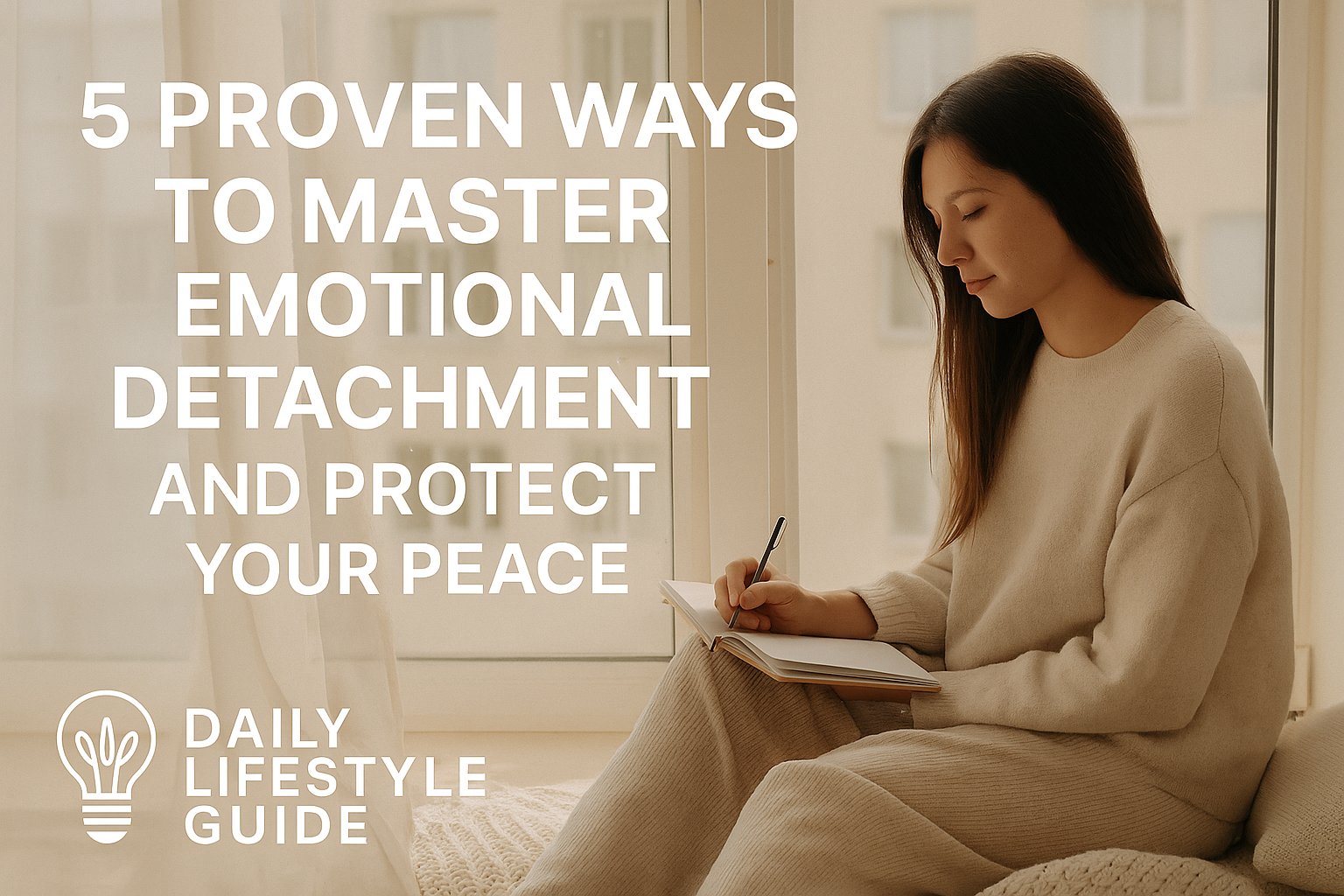
5 Proven Ways to Master Emotional Detachment and Protect Your Peace
5 Psychology facts Behind Understanding Emotional Detachment
There’s something strangely powerful about silence after emotional chaos. When you’ve finally found peace through emotional detachment — and the person who once caused the storm suddenly reaches out again — it feels like life is testing your growth.
Many people experience this: they finally detach emotionally from someone who drained their peace, and just when they begin to heal, that person reappears with words that stir old feelings. It’s not coincidence — it’s emotional timing. And understanding emotional detachment can help you respond with calm, clarity, and strength.
What Emotional Detachment Really Means
Emotional detachment isn’t coldness. It’s not bitterness or avoidance. It’s the art of separating your peace from someone else’s behavior. When you detach emotionally, you stop reacting from pain and start responding from awareness. You stop chasing closure and instead find it within yourself.
Detachment is freedom — not indifference.
It’s choosing not to let someone else’s inconsistency disturb your stability. Understanding emotional detachment is key to practicing it.
According to Psychology Today, practicing emotional detachment allows individuals to manage their emotional energy, reduce stress, and gain clarity in relationships. It’s not running away; it’s reclaiming control of your feelings.
When They Reach Out After You’ve Detached
In many emotionally complex relationships, one person often has a pattern of avoidance or control. When you finally step back, they feel the shift. Suddenly, your detachment becomes magnetic. The same person who ignored your calls or downplayed your feelings may begin to “check in” again.
You might receive a message like:
“I don’t just want to ignore the fact that you were unwell.”
or
“I tried to call, but your number wasn’t connecting.”
At first, it seems caring — even considerate. But when you read between the lines, you often find subtle guilt, pride, and an attempt to re-establish emotional control. It’s not always malicious; sometimes it’s confusion. They miss your energy but don’t yet understand the damage they caused.
This is where emotional detachment truly gets tested. It’s easy to detach in silence. The real challenge comes when you’re tempted to re-engage.
Recognizing the Emotional Pattern
When you practice emotional detachment, you begin to notice patterns instead of reacting to words.
- You see when someone is showing concern and when they’re trying to regain power.
- You notice how they re-enter gently but still avoid accountability.
- You realize that your peace now matters more than being understood.
Most times in some cases their messages often reflects — a blend of concern, self-protection, and subtle control. It’s human nature: people return not necessarily because they’ve changed, but because your absence exposes their emotional dependence.
Responding With Maturity and Boundaries
If someone returns after you’ve detached emotionally, you have two choices:
- Engage from your old emotional self — and reopen old wounds.
- Respond from your healed self — and maintain peace.
Emotional detachment gives you space to pause before responding. You no longer feel the need to prove, defend, or explain. You understand that closure doesn’t come from conversations, it comes from clarity.
You can respond kindly without re-attaching.
You can listen without being pulled back into chaos.
You can care without compromising your peace.
The Power of Staying Detached
Emotional detachment is strength disguised as stillness. It’s that quiet moment when you receive a message that once would’ve triggered you — but now, it doesn’t. You read it, feel it, and release it.
When Beulah texted again, it wasn’t about reconciliation — it was about reflection. It revealed that emotional detachment doesn’t just change your relationship with others; it changes your relationship with yourself.
You no longer need validation from others to feel seen. You begin to recognize that your healing isn’t a performance — it’s private, sacred, and steady.
Rebuilding Life After Detachment
Once you’ve mastered emotional detachment, life feels lighter. You focus on self-care, gratitude, and routines that strengthen your inner world.
You read more, rest more, and surround yourself with peace, not pressure.
You let go, not because you stopped loving, but because you started respecting yourself more.
If you’re navigating detachment or struggling to let go, read our other self-growth guides on Daily Lifestyle Guide:
And if you’d like a deeper understanding of the psychology behind emotional boundaries, this Healthline article on how to emotionally detach and find peace is an excellent resource.

Final Thoughts
When someone comes back after you’ve detached, it’s not a sign to return — it’s a sign of your growth. It’s proof that emotional detachment works.
You’ve stopped begging for effort. You’ve stopped negotiating your worth.
1️⃣
In today’s fast-paced world, understanding emotional detachment is essential for protecting your peace and maintaining emotional balance.
2️⃣
One of the biggest misconceptions about understanding emotional detachment is that it means being cold or uncaring—when in truth, it’s about self-control and inner peace.
3️⃣
When you practice understanding emotional detachment, you learn to observe situations without losing yourself emotionally.
4️⃣
The journey to understanding emotional detachment empowers you to love without losing your identity and care without becoming consumed.
5️⃣ Ultimately, understanding emotional detachment allows you to create healthier relationships, stay grounded during challenges, and protect your peace without building emotional walls.
Here I’ve linked below ⬇️ another powerful article click to read more❤️
🕊️ How to Detach Emotionally From Someone: 5 Proven Guide to Letting Go and Finding Peace
You’ve become peace in a world that thrives on reaction.
Remember: letting go doesn’t mean you stopped caring. It means you care enough about yourself to protect your peace.In truth, understanding emotional detachment helps you protect your peace while remaining open to healthy connections.